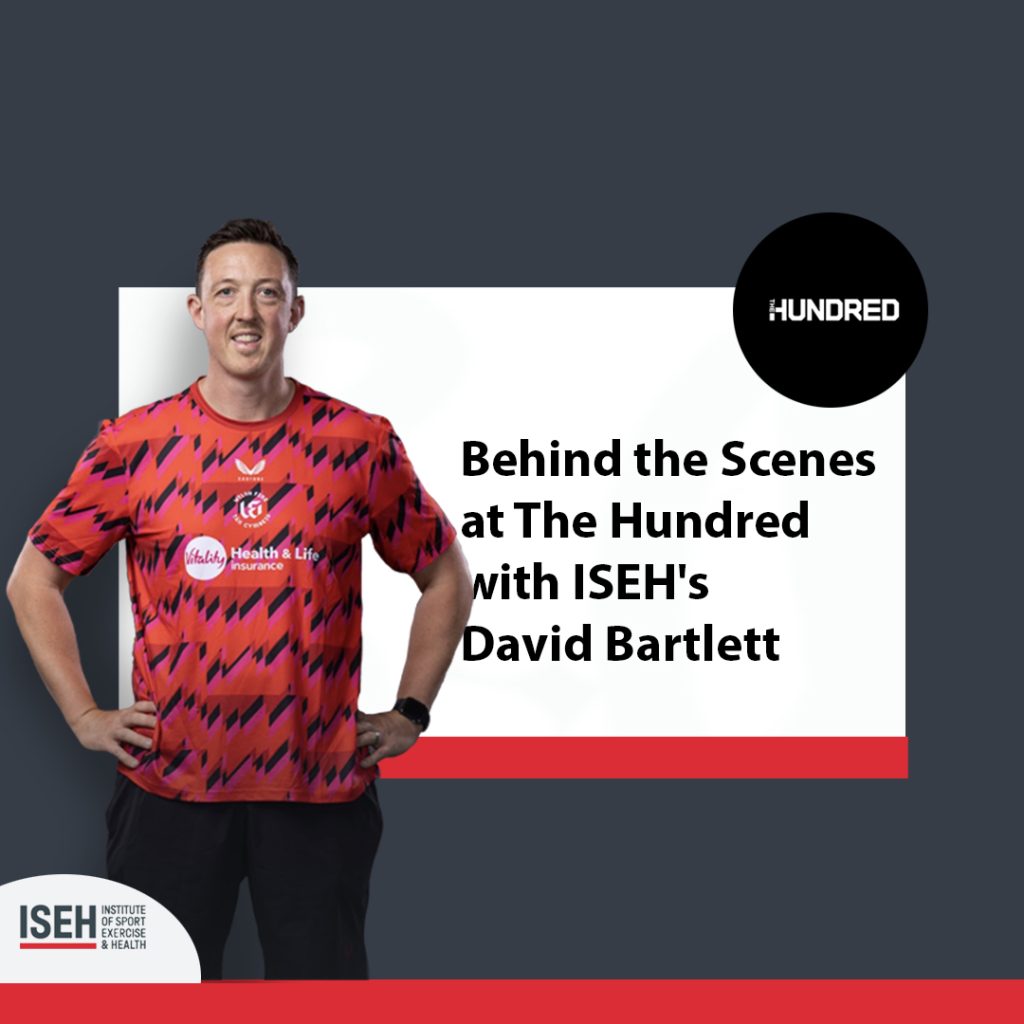
As The Hundred is in full swing for the summer, we caught up with ISEH Physiotherapist David Bartlett to find out what it’s like working in this tournament as a Physiotherapist in elite sport, supporting the Welsh Fire Men’s Team.
Having been part of the competition since its inaugural season in 2021, David plays a vital role in keeping players fit and match ready. His work spans injury assessment, rehabilitation, recovery planning, and return-to-play strategies, while also helping to create a positive and supportive environment within the squad.
“My role focuses on injury assessment and management, implementing effective recovery strategies, and ensuring players are physically prepared to perform at their best. Just as importantly, I see it as my responsibility to bring positive energy to the squad and contribute to a supportive team environment.”
David explains that balancing the demands of back-to-back fixtures, limited recovery time, and unexpected injuries is one of the most challenging aspects of the role.
During the tournament, he regularly manages injuries including hamstring and calf strains, shoulder problems, finger fractures, and pars defects. While The Hundred’s shorter format reduces overall workload compared with traditional competitions, its fast-paced, high-intensity nature can increase the risk of soft tissue injuries.
“Cricket presents a range of injury challenges. Common issues include pars defects, hamstring strains, finger fractures from catching or batting impacts, and shoulder pain associated with repetitive throwing.
“Managing these injuries requires accurate diagnosis, carefully planned rehabilitation, and well-structured return-to-play programmes that enable athletes to return to competition safely while protecting their long-term health.
“The Hundred involves a lower overall workload than longer cricket formats, but its fast-paced, high-intensity nature can increase the likelihood of soft tissue injuries, such as hamstring and calf strains.“
When asked about the most challenging parts of his role, David spoke openly and shared:
“Balancing the intensity of match days, short recovery periods, and unpredictable injury scenarios can be challenging. Throughout it all, it’s important to remain calm, adaptable, and provide reassurance to both players and staff.”
Away from the cricket field, David continues to lead the ISEH Concussion Clinic alongside Professor Mike Loosemore MBE, carefully balancing his clinical commitments with the tournament schedule.
“Be prepared for long hours, irregular schedules, and situations that require you to adapt quickly. Strong clinical skills are essential, but so are communication, resilience, and the ability to bring positive energy to the environment. When you’re working in elite sport, you’re not just part of the medical team – you’re part of the wider team culture.”
His advice for those hoping to work in elite sport is clear; build excellent clinical skills, be prepared to adapt to demanding environments, and remember that being part of a successful medical team is about more than treating injuries, it’s about contributing positively to the wider team culture.
David is one of the specialist physiotherapists within ISEH’s multidisciplinary team, which provides world-class care to athletes competing across professional rugby, Premier League football, Olympic sports, motorsport, and world championship boxing. His work at both ISEH and The Hundred reflects our commitment to delivering expert sports medicine at the very highest level.