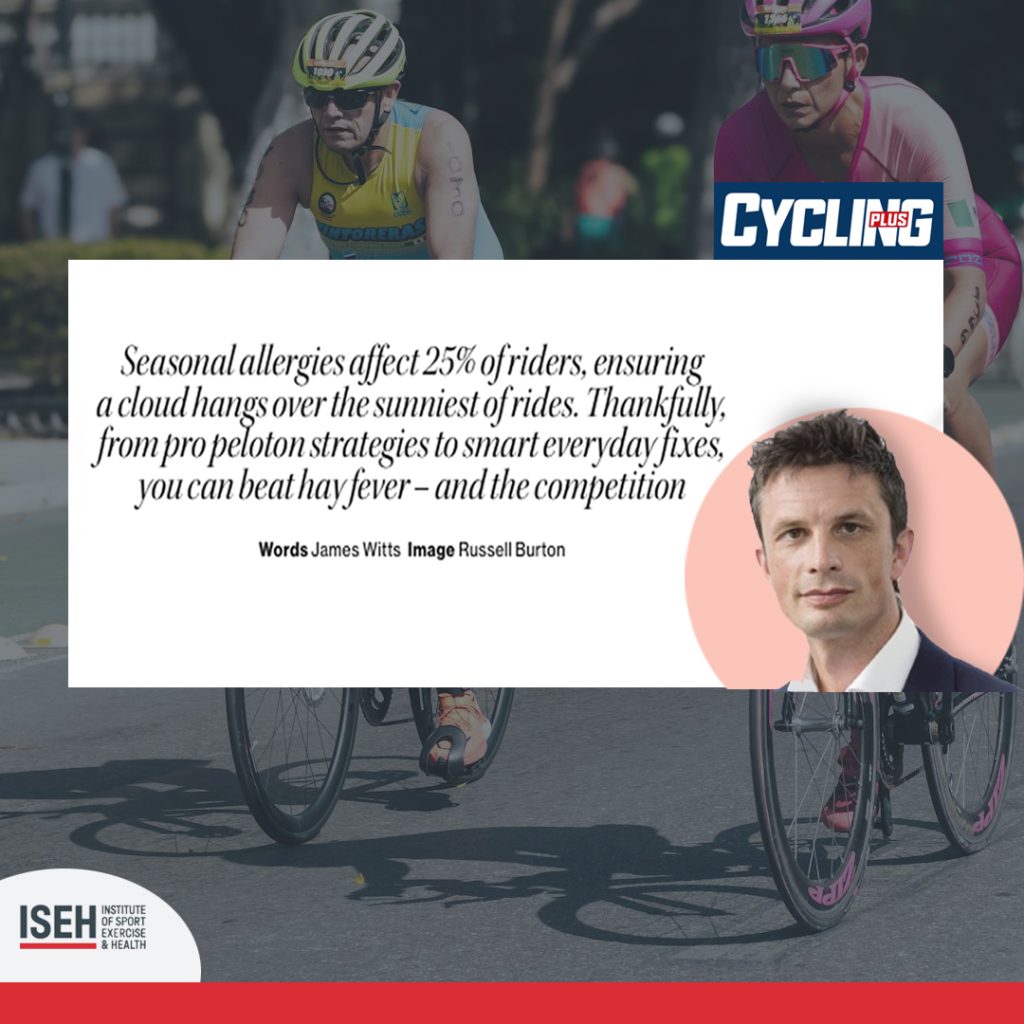
Around one in four adults in England experience hay fever and with symptoms for grass pollen sufferers continuing until around July and potentially worsening through June, ISEH’s Professor James Hull, Consultant Respiratory Physician, spoke to Cycling Plus, to discuss how seasonal allergies, focused on hay fever, can significantly affect cyclists, from recreational riders to WorldTour professionals.
Cyclists are especially vulnerable because intense riding increases breathing rate, drawing more pollen deep into the airways.
Professor Hull discussed how proactive preparation and consistent symptom management can help reduce the impact of allergies and support performance throughout the pollen season, plus covering desensitisation treatment for severe symptoms, if still troublesome despite trying all the recommended medications.
The article features a case study about Cofidis rider Simon Carr who suffered dramatic performance swings due to grass-pollen and mould allergies. Before diagnosis, his symptoms were mistaken for overtraining and at his worst, he explains how allergies could cost him up to 100 watts of power output.
Simon developed inducible laryngeal obstruction (ILO), a breathing disorder triggered during intense racing. From being under the care of Professor Hull and through medication, breathing retraining and allergy management strategies, he has learned to control symptoms far more effectively.
Hay Fever – Tips to Manage and Keep on Top of Symptoms:
Professor James Hull, recommends a simple strategy using the acronym ‘PEAK’:
P – Prepare/Prevent Know when your allergies usually occur each year:
- For instance, tree pollen allergies tend to strike earlier in the season (late January and peaking around now), while grass pollen allergies peak in May and June so preparation should begin sooner. Avoid waiting until symptoms become severe, plan ahead and ensure you have the necessary treatments ready.
E – Eliminate: Reduce your exposure to pollen wherever possible
- Dry clothing and sports kit indoors, wash your hair after outdoor activity, and try to train when pollen levels are lower.
- Wearing wrap-around sunglasses can help protect your eyes, while nasal ointments or even cotton wool (during indoor warm-ups before heading outside) may help trap pollen.
A – Act Early:
- Begin taking antihistamines as symptoms start to appear or just before.
- Regularly rinse your nasal passages with saline to remove pollen and consider using nasal sprays.
- Be mindful of anti-doping regulations if you compete in sport, and avoid antihistamines that cause drowsiness.
K – Keep on Top / Re-evaluate:
- Continue treatment even if symptoms improve, as pollen levels can fluctuate and symptoms may return.
- If your hay fever persists and is severe, consider consulting an allergist, as you may benefit from desensitisation therapy.
Read the full feature in Cycling Plus’s June 2026 issue.
At our facility in Central London, Professor James Hull works with athletes at our Sports Respiratory Clinic to discuss hay fever and other respiratory problems.