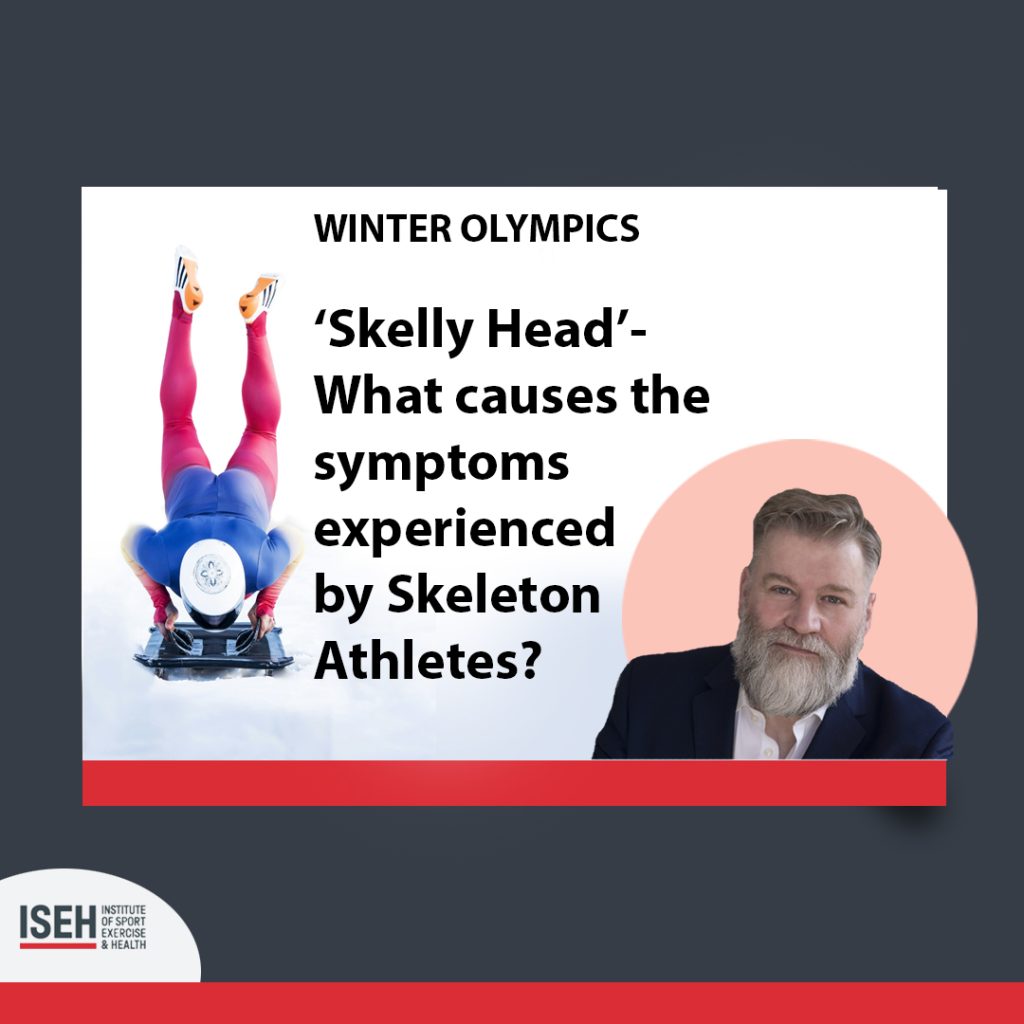
The Winter Olympics will take place in Italy from 6 February, and here, Professor Mike Loosemore MBE, Consultant in Sport & Exercise Medicine and former Chief Medical Officer for Team GB, shares expert insight on ‘Skelly Head,’ drawing on over 30 years of experience in elite sport, concussion, and athlete brain health.
Unlike contact sports, symptoms Skeleton athletes experience often arise without impact, making diagnosis challenging for clinicians unfamiliar with winter sport physiology.
See the full blog on Your Brain Health.
Key points from Prof. Mike Loosemore MBE to keep in mind:
- Skeleton athletes are exposed to extreme vibration and acceleration forces during the Winter Olympics, often without any direct head impact.
- As a result, athletes may develop symptoms such as headache, dizziness, visual disturbance, and neck discomfort that closely resemble concussion.
- This symptom overlap can make diagnosis difficult, particularly for clinicians unfamiliar with winter sport physiology.
- The condition commonly referred to as ‘Skelly Head’ or ‘Sled Head’ is not concussion, despite its superficial similarities.
- Unlike concussion, Skelly Head typically occurs without collision, rotational acceleration, or a consistent post-traumatic cognitive profile.
- Evidence suggests the primary cause is repeated high-frequency vibration transmitted through the sled, ice, helmet, and into the cervical spine.
- It’s important to not view this vibration as a minor, incidental aspect of the sport. It functions as an active sensory stressor, occurring within frequency ranges known to disrupt the vestibular system and the cervical sensors responsible for spatial orientation.
- Understanding Skelly Head is essential for protecting athlete welfare, guiding accurate return-to-play decisions, and avoiding unnecessary concussion protocols during elite competition.
Professor Mike Loosemore MBE, has dedicated his career to caring for and rehabilitating elite and recreational athletes, alongside non-athletic patients of all ages. A recognised leader in concussion and athlete brain health, he sees both private and NHS patients at the ISEH in Central London and has wide-ranging experience treating concussion in children and adults.